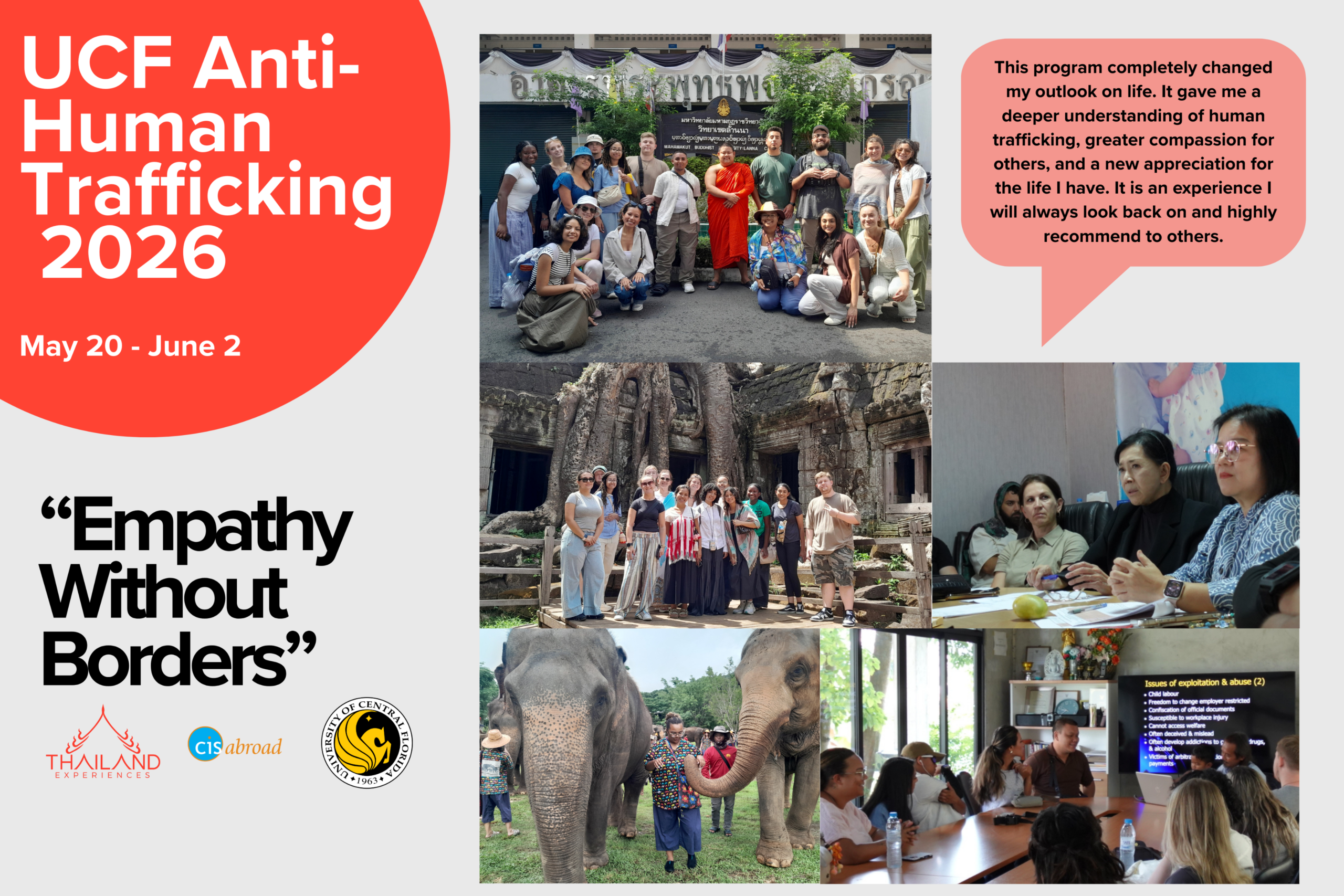
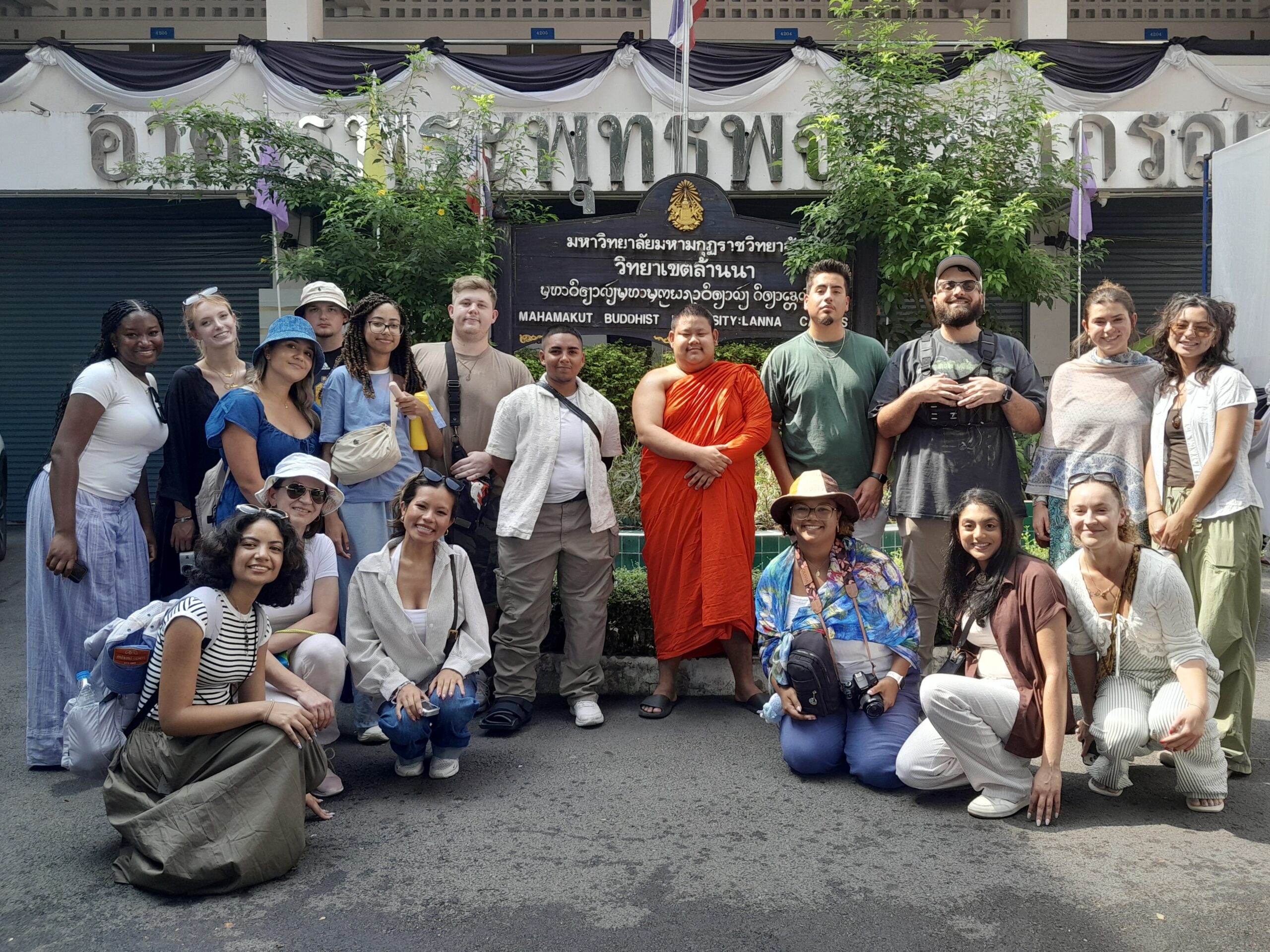
Throughout the UCF Anti-Human Trafficking 2026 program, students stepped beyond the classroom to gain a deeper understanding of the many forms of human trafficking and the complex social issues surrounding it in Thailand. Rather than learning solely through lectures, students engaged directly with NGOs, government agencies, rehabilitation programs, and local communities, allowing them to connect global human trafficking issues with real people, real stories, and real solutions.
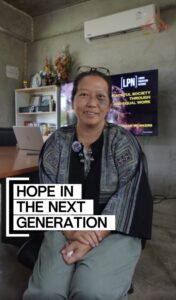
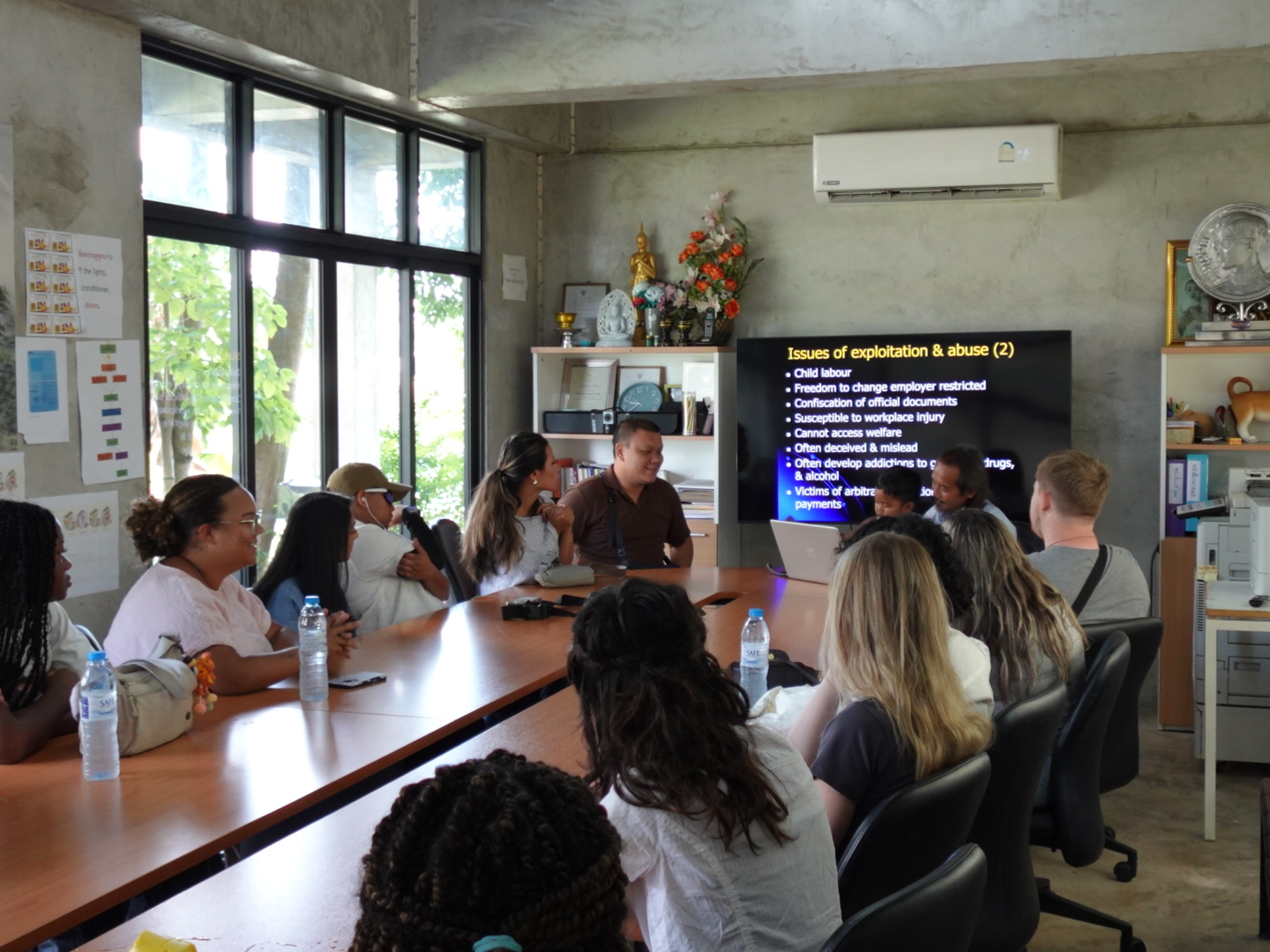
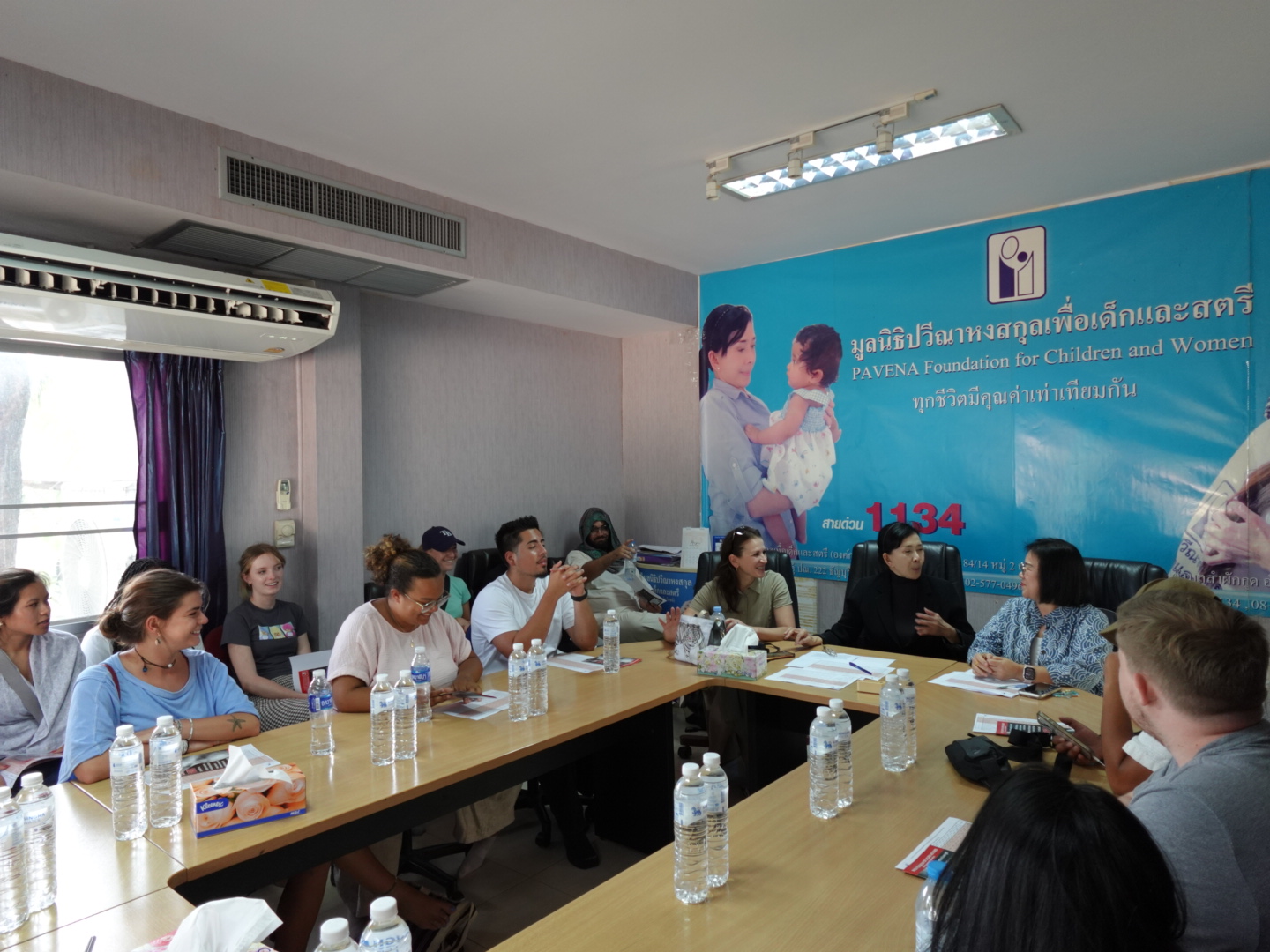
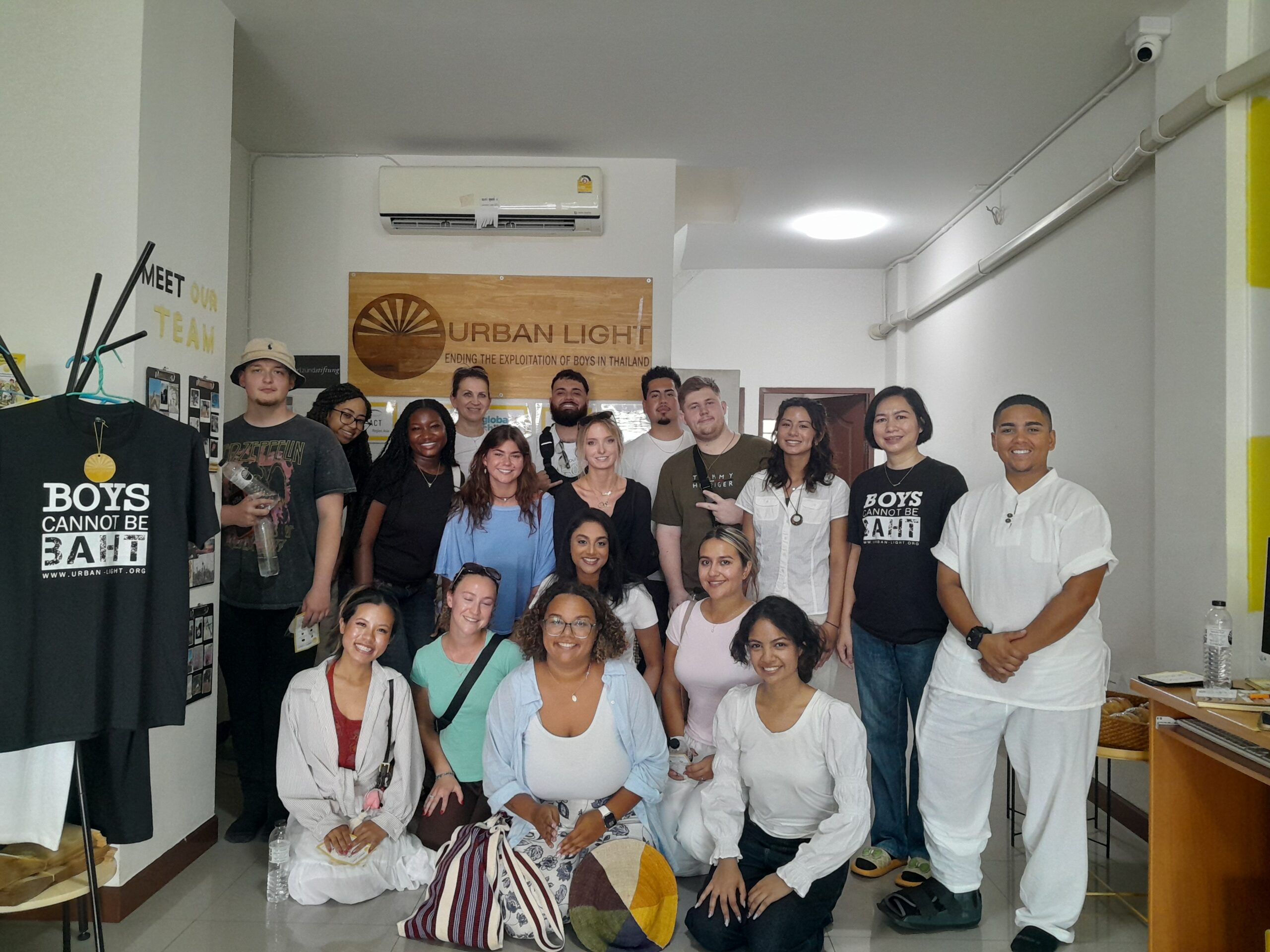
Each site visit offered a unique perspective. At Urban Light, students learned about the growing challenges of child sexual exploitation, online grooming, and financial exploitation affecting vulnerable boys. Through the Labour Rights Promotion Network (LPN), they explored illegal labor trafficking within Thailand’s fishing industry and discovered how NGOs work alongside survivors by gathering evidence, supporting rehabilitation, creating employment opportunities, and raising international awareness despite systemic corruption and legal limitations. Discussions at the Pavena Foundation expanded students’ understanding of sex trafficking occurring both within and outside families, while encouraging thoughtful comparisons between trafficking cases in Thailand and the United States. Students were also warmly welcomed with traditional Thai hospitality, enjoying homegrown tropical fruits and mango sticky rice shared by Khun Pavena herself.
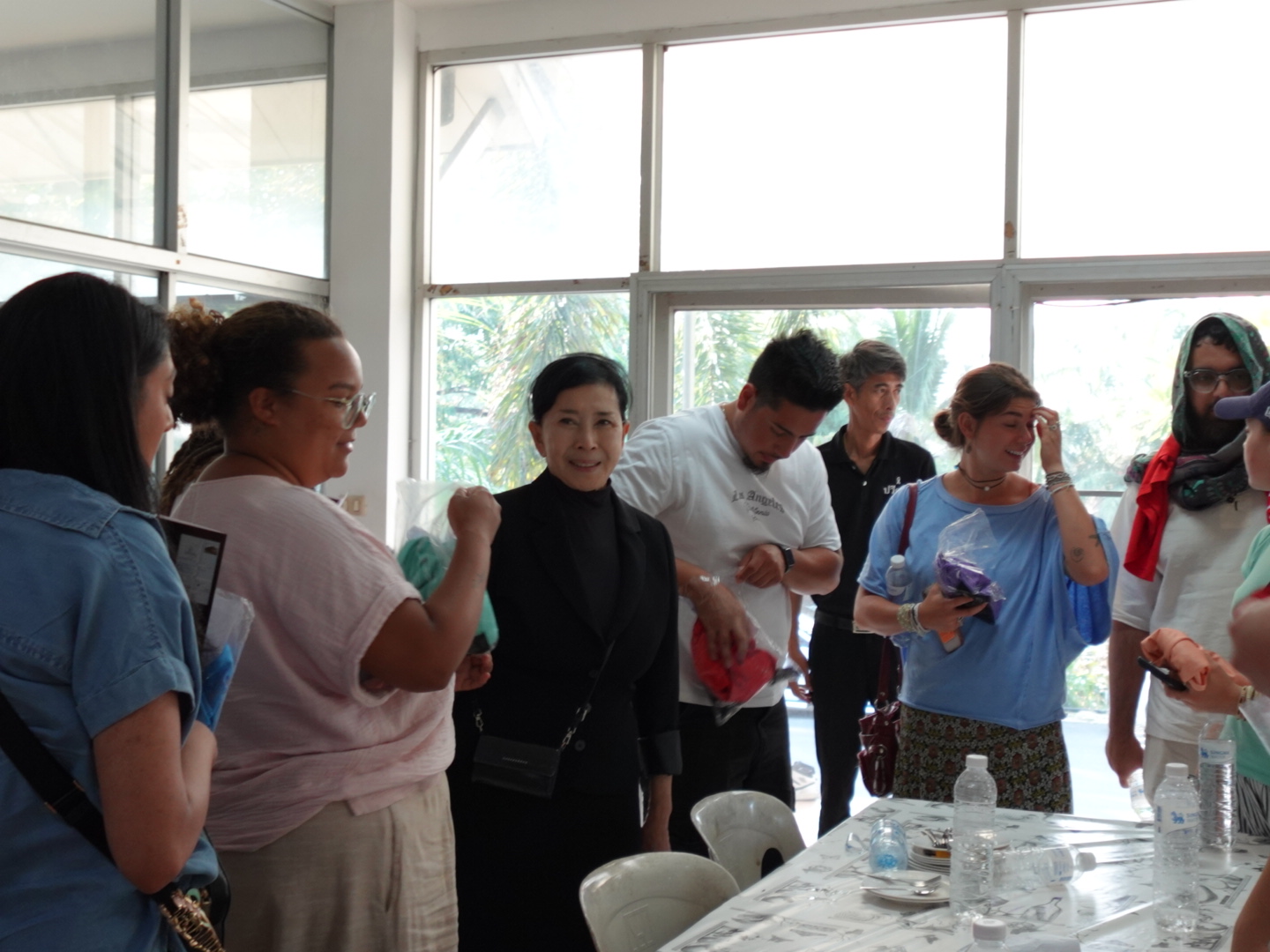
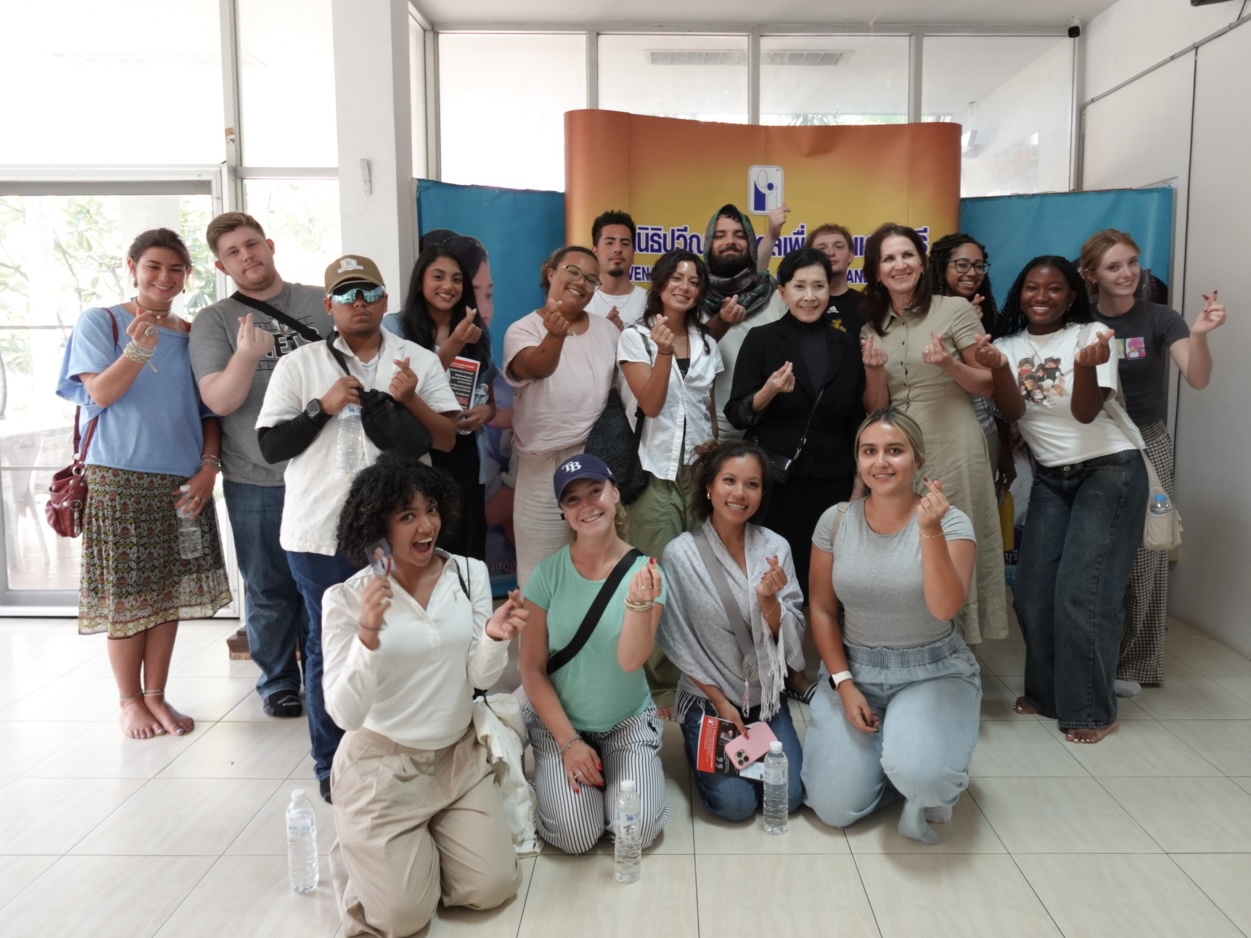
The program also introduced students to broader social systems connected to vulnerability and recovery. Visits to the Thailand Institute of Justice’s women’s correctional facility highlighted rehabilitation through vocational training, where incarcerated women develop skills such as traditional weaving, sewing, embroidery, and Thai massage to prepare for successful reintegration after release. In Mae Sot, students visited healthcare and refugee support organizations serving displaced Burmese communities, gaining insight into humanitarian efforts along the Thailand–Myanmar border and the international cooperation required to support refugees.
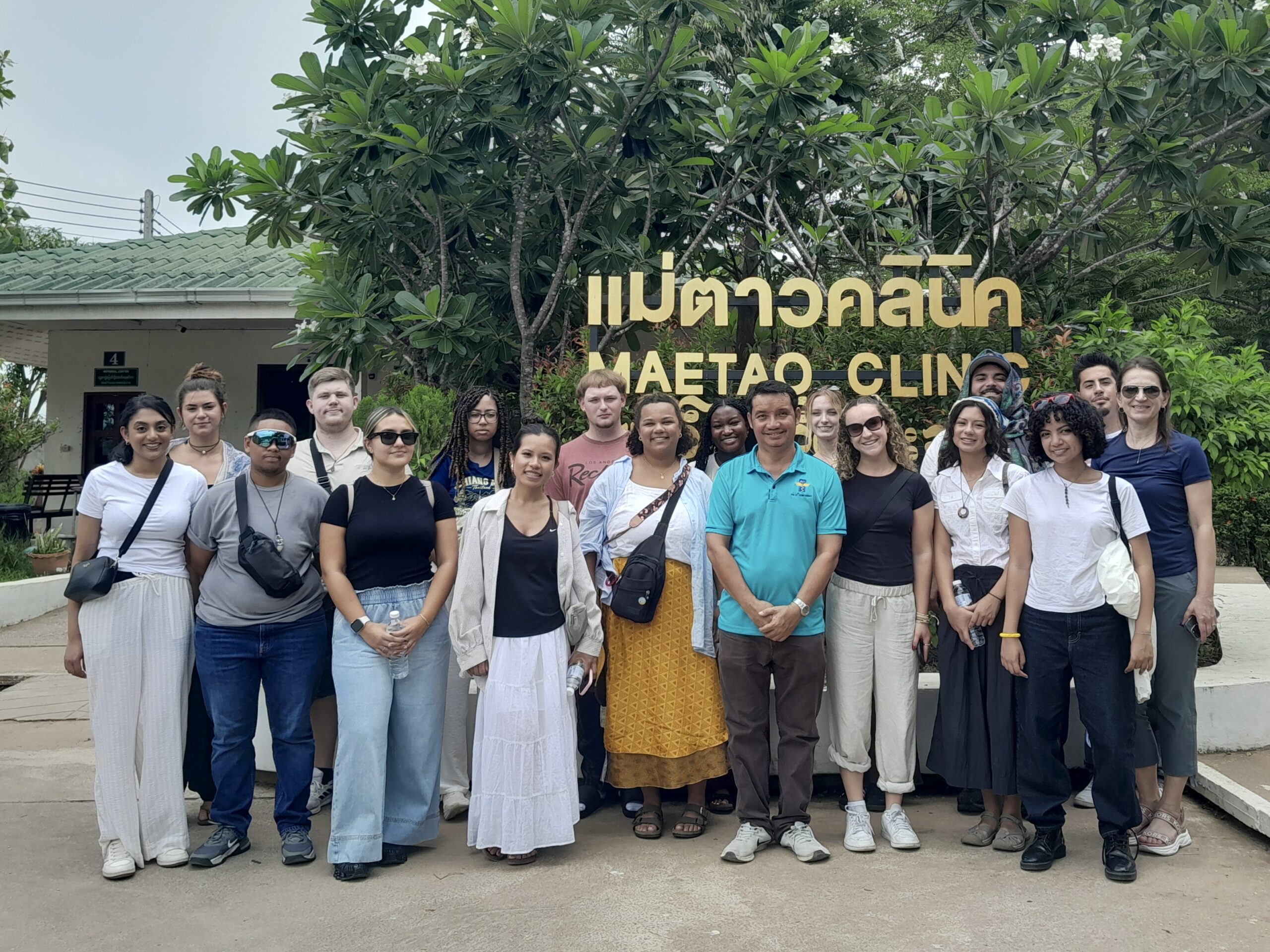
Beyond learning, students actively gave back to every organization they visited through charitable donations, contributing 5,000 THB to Urban Light and 4,000 THB to each of the remaining partner organizations. Many also became advocates by sharing these experiences with family and friends back home, raising awareness of human trafficking and encouraging continued support for organizations working on the front lines.
Some of the most meaningful moments happened naturally. During visits to Urban Light and the women’s vocational training center, many students chose to purchase handmade products to directly support local artisans, survivors, and incarcerated women rebuilding their lives. One especially touching moment occurred when a student whose parents had emigrated from Myanmar met several Burmese children at Urban Light. Speaking together in Burmese instantly brought smiles to the children’s faces, creating a genuine connection that transcended language barriers and reminded everyone that compassion often begins with simple human connection.
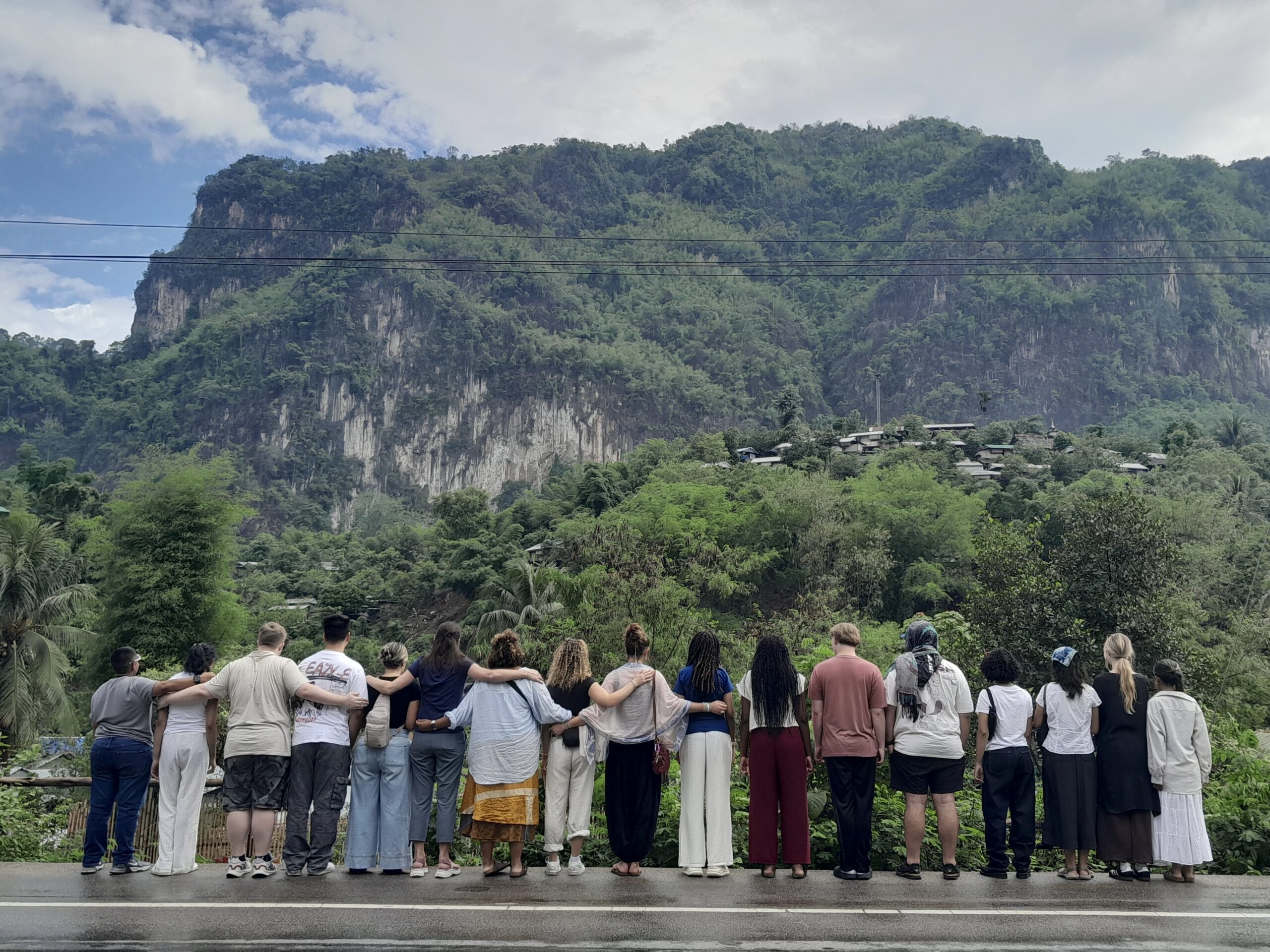
By the end of the program, students described the experience as transformative. While adjusting to unfamiliar food was initially one of the few challenges, they quickly adapted and embraced every opportunity the program offered. More importantly, they left Thailand with a deeper understanding of human trafficking, stronger intercultural communication skills, greater empathy for vulnerable communities, and a renewed commitment to becoming informed global citizens capable of creating positive change.